

Spain Talks highlight Sustainability, Accessibility as tourism priorities
The Tourist Office of Spain in Toronto launched its new Spain Talks event with a strong message for the Canadian travel trade: the future of tourism hinges on sustainability and accessibility.
Spanish tourism leaders, Canadian academics, and accessibility advocates examined how destinations can adapt to the most pressing issues facing the industry. For Canadian advisors, it was a one-stop shop for the latest insights—straight from the source—confirming why Spain remains one of the world’s tourism leaders.
Spain’s Growing Pull in Canada
Alfredo Martínez Serrano, Ambassador of Spain to Canada, opened with the numbers: nearly 700,000 Canadians visited Spain in 2023, compared to 384,000 in 2019. Increased connectivity, cultural ties, and Spain’s growing appeal as a year-round destination continue to fuel growth.
“Spain is establishing itself as one of the favourite destinations for Canadians,” Ambassador Serrano said.
Tourism accounts for 13% of Spain’s GDP, noted Isabel Martín Benítez, Consul of Tourism Affairs in Canada. In 2024, Spain welcomed 93 million international visitors, making it the second most visited country in the world.
“Spain Talks has a double objective,” she said. “First, to showcase how Spain is working on sustainability in tourism, and second, to create a space for exchanging ideas.”
The Toronto edition of Spain Talks is part of a series of flagship forums hosted in major European cities, such as London, Istanbul, and Stockholm. It marks the debut of the series in Canada.
Valencia and Lanzarote in Focus
Two regions highlighted how Spain is putting these ideas into practice.
Valencia, recently named European Green Capital 2024, balances its popular coastline with strategies to draw visitors inland. The region boasts 32 Michelin-starred restaurants, 16 UNESCO World Heritage Sites (five in Valencia city alone), and more than 100 traditional rice recipes beyond paella.
“Valencia has a Mediterranean attitude,” said Juan Antonio Muñoz, Promotion Director, Valencia Region Tourism Board. “Our approach is to respect residents’ rights while managing visitor growth responsibly.”
Lanzarote, in the Canary Islands, showcased a sustainability model dating back to the 1960s, when artist César Manrique helped enshrine protections for its volcanic landscape. Today, nearly half the island is under protection, and the entire territory is a UNESCO Biosphere Reserve.
Chief Marketing Officer of Turismo Lanzarote, Paula Muñoz López, highlighted how the island integrates economic growth with social programs. Training schools with the Red Cross, internationally recognized volcanic viticulture, and sports tourism like the 30-year-old Ironman Lanzarote all boost community benefits. With only 160,000 residents, Lanzarote welcomed over three million visitors last year.
“Each athlete comes with three more people, and they stay an average of seven days,” López noted. “This creates a social buzz and new jobs while reinforcing community pride.”
Balancing Locals and Visitors
The first panel, How to keep balance between local population and tourists, tackled overtourism head-on.
Dr. Rachel Dodds, Professor at Toronto Metropolitan University, called for greater transparency around tourism taxation. “If tourism taxes are really going to work, they have to regenerate the destination,” she said.
Fergus Maclaren, professor emeritus of ICOMOS, which is the International Council on Monuments and Sites, agreed, noting funds should go to visible improvements like heritage restoration. Muñoz explained that in Valencia, no tourism tax exists after the regional government removed the option two years ago.
The discussion shifted toward measuring impact. “You can’t manage what you don’t measure,” Dodds said, stressing that arrival numbers mean little without evaluating cultural preservation, environmental impact, and residents’ quality of life.
When communities see cleaner water, improved amenities, or reduced taxes, she argued, they welcome visitors. But when crowded out of cafés and beaches, tensions rise.
Changing tourist behaviour, the panel agreed, requires systemic change. Average hotel guests consume hundreds of litres of water daily. Dodds argued structural fixes like low-flow showers matter more than relying on altruism. Maclaren added that early “green” measures—like towel-reuse cards—often saved hotels money more than the environment.
Valencia’s annual Las Fallas festival, Muñoz noted, is an example of culture-first tourism. “It’s not for sale. You can share it, you can feel it, but it belongs to the community.”
The bigger issue, however, is Spain’s overall carrying capacity. Municipalities face limits when ports and airports expand beyond local wishes. Travelling during the off-season, not just in summer was a recommendation.
Ambassador Serrano suggested innovation and redirection to second-tier destinations as solutions. “There is huge room to diversify. That is why we are offering new destinations,” he noted listing such cities and regions as Valencia, Mallorca and Malaga as alternatives. Léon, another lesser-known destination on the other hand, will be the host city for the next ACTA International Conference.
Initiatives like Creaturisme, which unites 1,300 small Valencian enterprises, aim to spread visitors to inland towns such as Cartagena, rich in Phoenician heritage yet outside the other larger tourism hubs.
Building an Accessible Industry
The second panel, Designing a Tourism Industry That Includes Everyone, addressed accessibility. Consul Benítez acknowledged that Spain has advanced in accessibility but hasn’t promoted it enough. “Everyone is welcome in our restaurant,” she said, “but not if the destination is full of barriers.”
Speakers included Miguel Carrasco Hernández, Director of Tourism at Impulsa Igualdad / Tur4All, and Canadian activist Maayan Ziv, Founder of Access Now. Both emphasized that accessibility must move beyond intent to execution—removing physical obstacles and ensuring equal service delivery.
Destination panelist Susana Pérez, President of the Island Association of Hotel and Tourist Apartment Entrepreneurs of Lanzarote, said her government has a 2024-2030 strategy of sustainability and inclusion in infrastructure, in beaches, and services and mobility in transport like public transport, buses and also wheelchairs.
Hernández added that in Lanzarote, they have really good accessible taxis. “You can take an accessible taxi and go to the coast and have a scuba diving accessible activity (with advanced reservations). And then go to the beautiful green area La Geria and enjoy accessible wine.”
Spain, home to the most UNESCO Biosphere Reserves and the world’s second-largest high-speed train network, is positioning inclusivity as central to its tourism strategy. “Accessibility is not an add-on—it’s the future,” Ziv stressed.
Advisor Takeaway
For Canadian advisors, Spain Talks underscored two key mandates: lead in sustainability and advance accessibility. With rising visitor numbers, strong airlift, and robust destination strategies, Spain continues to reinforce its global tourism leadership while offering Canadian clients a destination that is both responsible and inclusive, actively building a better, more welcoming world for every traveller.
In the Photos
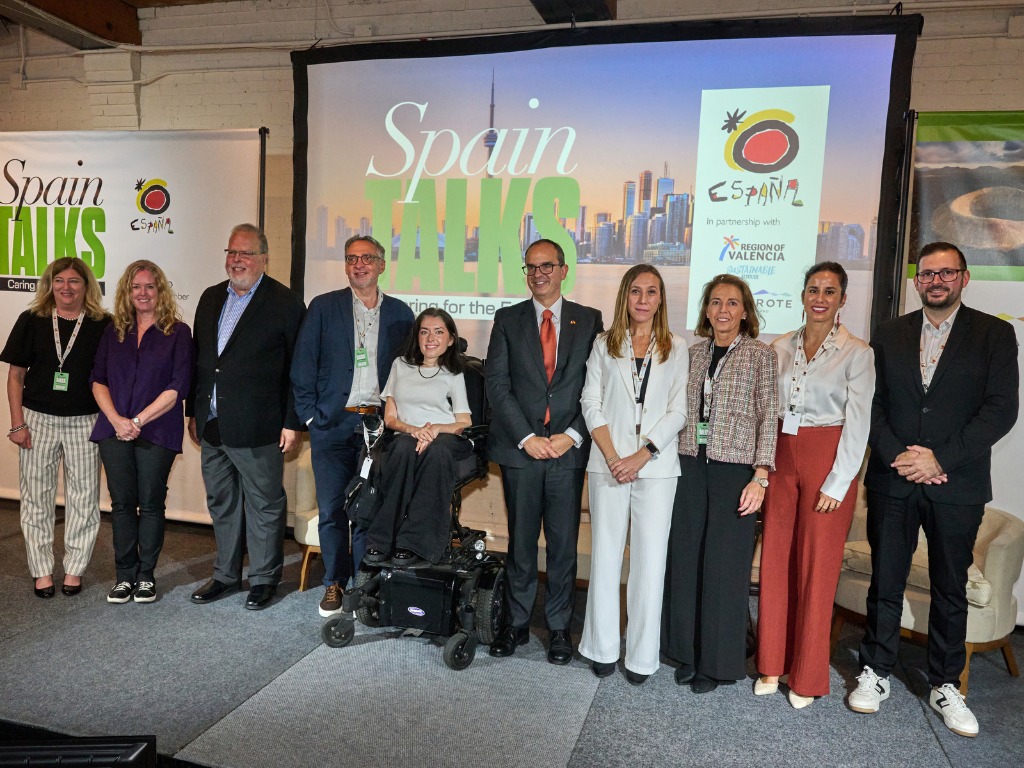
TOP
Seen here, from l to r, are: Marina Jimenez, Moderator; Dr. Rachel Dodds, Professor, Toronto Metropolitan University; Fergus Maclaren, President Emeritus, ICOMOS International Cultural Tourism Committee; Juan Antonio Muñoz, Promotion Director, Valencia Region Tourism Board; Maayan Ziv, CEO & Founder of AccessNow; His Excellency Alfredo Martínez Serrano, Ambassador of Spain to Canada; Isabel Martín Benítez, Consul of Tourism Affairs in Canada; Susana Pérez, President of the Island Association of Hotel and Tourist Apartment Entrepreneurs of Lanzarote (ASOLAN) and Lanzarote Tourist Federation; Paula Muñoz López, Chief Marketing Officer of Turismo Lanzarote; Miguel Carrasco Hernández, Director of Tourism, Impulsa Igualdad / Tur4All (Spain) and COO in TUR4all Travel.
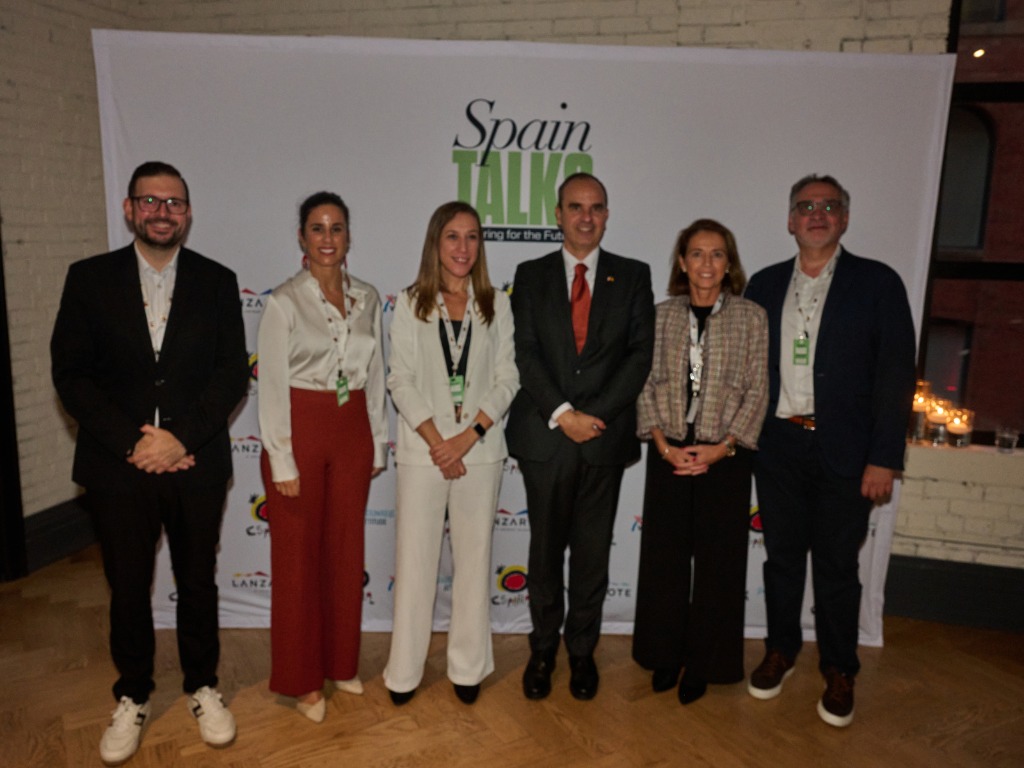
MIDDLE
Seen from l to r, are: Miguel Carrasco Hernández, Director of Tourism, Impulsa Igualdad / Tur4All (Spain) and COO in TUR4all Travel; Paula Muñoz López, Chief Marketing Officer of Turismo Lanzarote; Isabel Martín Benítez, Consul of Tourism Affairs in Canada, His Excellency Alfredo Martínez Serrano, Ambassador of Spain to Canada; Susana Pérez, President of the Island Association of Hotel and Tourist Apartment Entrepreneurs of Lanzarote (ASOLAN) and Lanzarote Tourist Federation; Juan Antonio Muñoz, Promotion Director, Valencia Region Tourism Board
Photos by Brian Summers
Tags: Spain