


Tourism Always Recovers: WTTC delivers clear message in new report
In a new report, the World Travel & Tourism Council (WTTC) draws on four decades of global data to confirm the travel and tourism sector’s structural resilience and to deliver the powerful message to governments, investors, and travellers worldwide that tourism always recovers.
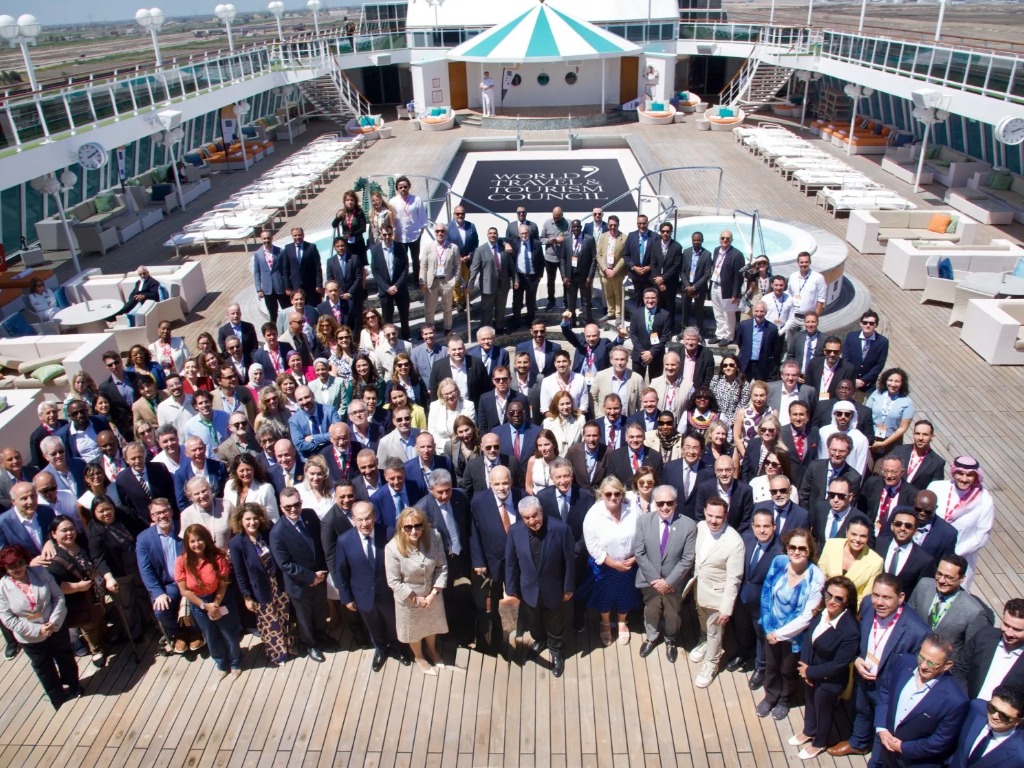
“Accelerating Travel & Tourism Recovery – Global Evidence from Four Decades of Crises,” – developed in partnership with Chemonics International and George Washington University Business School — was released during the WTTC’s Leadership Cruise event in Egypt last week.
The report found that across 100 significant crisis events, no destination has suffered long-term collapse once a crisis has ended, especially with strong leadership from government.
In fact, it said that recovery is not only consistent, but in most cases leads to stronger growth.
The launch of the new research comes at a critical moment for global travel and tourism, as the sector continues to navigate geopolitical uncertainty while driving economic growth worldwide.
According to WTTC’s latest data, travel and tourism contributed $11.6 trillion to global GDP in 2025 (9.8% of the global economy) and supported 366 million jobs, one in every nine globally.
The WTTC’s new research also confirms that recovery is not a question of “if,” but “how fast.” Even in the face of the COVID-19 pandemic, the most severe global shock in modern history, international travel rebounded from a 72% decline in 2020 to 1.47 billion arrivals by 2024, (the same as in 2019) and by 2025, international visitor spending reached a record $2.02 trillion.
And following the 2008 global financial crisis, the sector recovered within just two years, going on to set new records in international arrivals and reaching $1.35 trillion in international visitor spending by 2010.
In fact, the report revealed that, in most cases, destinations not only recovered but exceeded their previous peaks, demonstrating that disruption often creates opportunities for transformation, investment, and growth.
Gloria Guevara, President & CEO of WTTC, said: “Today, we are sending a clear and evidence-based message to the world: travel and tourism always recovers. This report proves what our sector has demonstrated time and again: resilience is built into our DNA. Even after the most severe crises, people continue to travel, and destinations come back stronger, with faster action leading to faster recovery.”
And Guevara continued: “Launching this report during our Leadership Cruise in Egypt, at such a pivotal moment, reinforces the importance of leadership, coordination, and confidence in accelerating recovery. The question is not whether the sector will recover, but how quickly we choose to enable that recovery.”
Ibrahim Osta, Senior Economic Growth Director & Global Tourism Lead, Chemonics International, observed: “Across every major tourism crisis where I have supported governments and industry leaders, from geopolitical instability to terrorism and pandemics, recovery was never accidental. The destinations that emerged stronger were those that combined decisive leadership, public private coordination, and sustained support for the small businesses and communities that form the backbone of the visitor economy.”
The report also highlights that the speed and strength of recovery depend primarily on the quality of policy responses, particularly coordination between governments and the private sector, clear communication, and sustained investment during times of crisis.
It identifies four pillars for building a resilient tourism framework and accelerating recovery: restoring traveller confidence, maintaining business continuity, ensuring decisive institutional response, and driving long-term structural adaptation.
And it offers key, evidence-based principles for policymakers and investors to drive faster rebound: invest counter cyclically at the trough of the crisis, protect SMEs as the backbone of the sector, maintain air connectivity as a strategic asset, avoid overreaction in messaging and policy, and use disruption to build forward through transformation and diversification.