

As Canadian Travel to Europe Grows, ETC and CATO Advocate for Travelling Differently at Hamilton Travel Trade Show
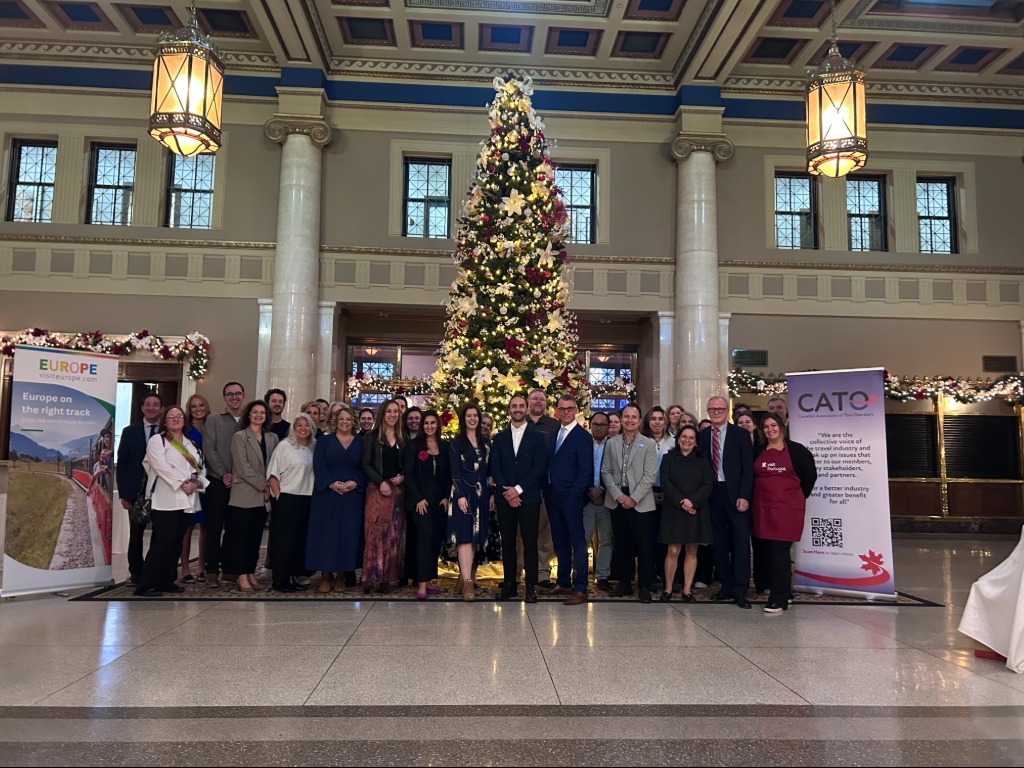
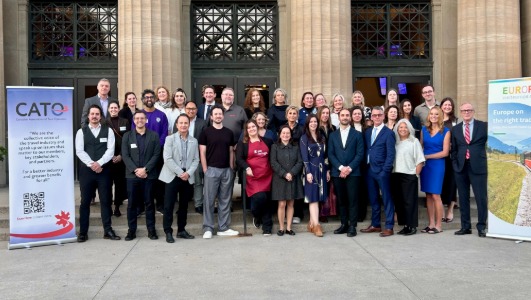
Some 175 travel industry professionals, including destination representatives, tour operators and approximately 120 travel advisors, gathered at LIUNA Station in Hamilton yesterday evening for a taste of Europe and a look at the changing ways Canadians are exploring the continent.
Hosted by the European Travel Commission (ETC) and the Canadian Association of Tour Operators (CATO), the evening offered an interactive journey through European destinations. Guests sampled Portugal’s famous pastéis de nata, Irish oysters, Spanish tapas, German Christmas cake, Belgium chocolate and Polish coffee. They also tried their hand at Czech printmaking, took home a Swiss raclette maker and cheese and posed for photos at Atout France’s photo booth.
But beyond the culinary treats and cultural experiences, Canadian travel trade was encouraged to introduce their clients to new ways of experiencing the continent as European travel continues to grow.
According to ETC, Canada is Europe’s third-largest overseas source market, with approximately 7.5 million Canadian arrivals in 2025, an increase of nearly 4% over the previous year. A further increase of almost 6% is forecast for 2026.
“Half of Canadian travellers to Europe are actually repeat visitors,” said Matteo Nardin, a spokesperson with the ETC. “They want to connect more deeply with local communities and local cultures.”
According to ETC research, Canadians planning European trips this autumn expected to stay an average of 10.9 nights and visit 2.2 countries.
This shift towards more meaningful experiences is central to ETC’s Unlock an Unexpected Upgrade campaign, launched in 2024 and built around four pillars: Travel Off-Peak, Go Offbeat, Travel Green and Love Local.
“We want to attract value more than volume,” Matteo explained.
Rather than presenting ‘off-peak and offbeat’ travel as compromises, the campaign highlights how these choices can actually upgrade a European holiday, making it richer and more rewarding.
For travel advisors, it showcases ways to educate clients, develop itineraries and sell Europe throughout the year.
Go Off-Peak: Europe All Year Round
“We want people travelling 12 months of the year,” said Brett Walker, chair of CATO. Walker emphasized that off-peak travel should be about more than avoiding crowds or saving money, but about choosing a destination because “there’s something really, really interesting at that time of the year in that place.”
Sandra Bailey Moffatt, chair of ETC’s Canadian chapter and a representative of Tourism Ireland, pointed to Ireland’s Halloween celebrations as a perfect example.
“For us, Ireland is the home of Halloween. We have incredible product at that time of year,” she said, citing week-long festivals and itinerary opportunities that are still largely under the radar.
Having just returned from Ireland myself this month, I can certainly attest to the pleasures of off-season travel. Exploring the country’s spectacular coastal scenery without the summer crowds was a highlight of my trip. And yes, the airfare was considerably lower, too.
Moffatt emphasized that every destination represented at the event would have similar reasons to visit outside the peak summer season.
The numbers reflect the shift.
According to ETC research, 64% of Canadians planned to travel outside peak periods in 2026. Canadian arrivals also recorded double-digit year-over-year growth in April (+16.2%), May (+10.5%) and June (+18.0%).
“September is the new August,” said Matteo Nardin of ETC, noting that Canadians are increasingly extending their European travels into September and October, a trend supported by airlines extending some seasonal flight schedules later into the fall.
And there is a strong business case for encouraging this change.
“The reason we’re here is because these things we’re talking about tonight are really good for business,” said Brett Walker, chair of CATO, during his dinner remarks.
Walker told the audience that spreading demand throughout the year benefits destinations, creating opportunities for more consistent employment and regional development.
For advisors with clients who have flexible schedules, he encouraged promoting shoulder-season travel for what it offers, rather than simply as an alternative to busy summer crowds.
Go Offbeat: Beyond the Bucket List
While iconic attractions such as the Eiffel Tower and Colosseum will always draw visitors, repeat travellers are increasingly looking beyond the familiar.
ETC’s research suggests that Canadians are particularly receptive to discovering lesser-known destinations, especially when those experiences complement visits to Europe’s major cities.
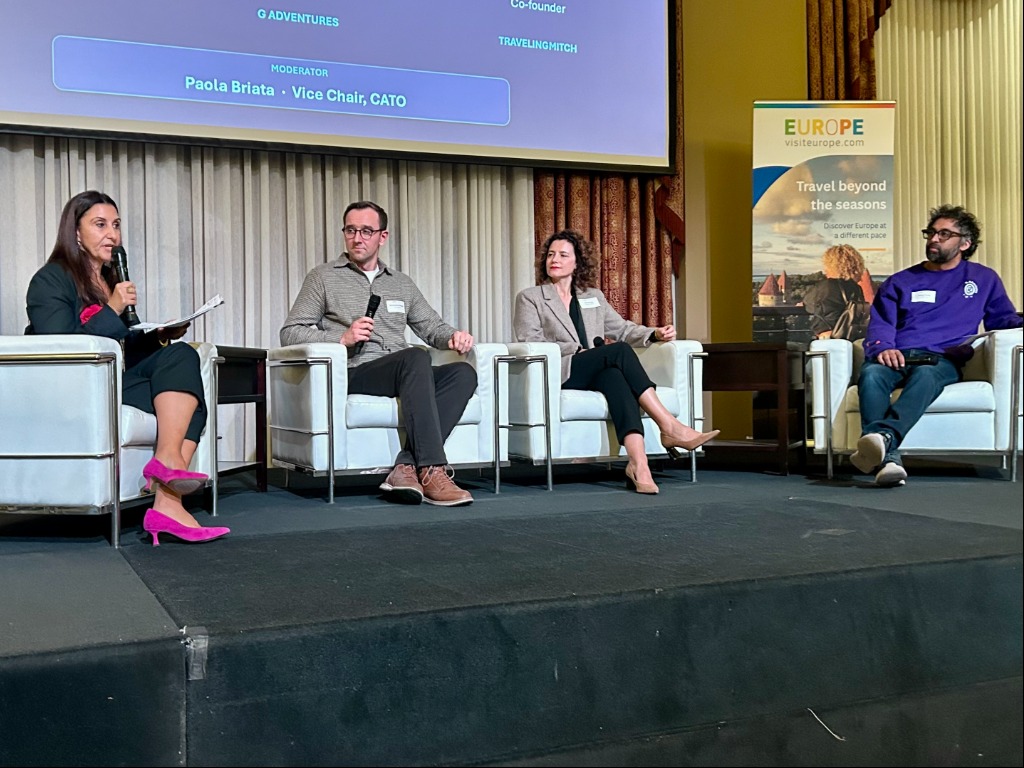
Chris Mitchell, a travel content creator and founder of travelingmitch.com, offered this colourful analogy during the panel discussion:
“Before, travellers explored Europe as though they were snorkelling, but now they’re putting on full scuba gear because they want to dive deep.”
The move from breadth to depth is also influencing the way tour operators develop their products.
“It’s Tuesday, it must be Belgium. It really doesn’t resonate with people anymore,” said Ana Rooney, VP Design & Operations at Collette, during the panel discussion.
The 109-year-old company continues to offer its traditional Classic tours, but Rooney reported significant growth in the demand for small-group travel, particularly among Canadians.
For advisors, this emphasizes the importance of recommending smaller-group products and introducing repeat visitors to overlooked regions.
Go Green: The Joy of Train Travel
The campaign’s third pillar encourages travellers to consider more sustainable transportation options, particularly Europe’s extensive rail network.
It’s not only about reducing environmental impact, but also about the pleasures of travelling in other ways.
A scenic train journey through the countryside, for example, can become a memorable part of a vacation rather than simply a means of transportation.
Brett Walker, chair of CATO, noted that traditional motor coach touring is giving way to smaller-group experiences that allow travellers to use public transportation.
“For many of the tour operators here, not so long ago, it was all about motorcoach touring all the time,” he said. “Now you’re seeing that style of touring wane.”
Smaller groups make it easier to explore destinations using local transportation.
Fittingly, the evening’s venue, LIUNA Station, is located beside Hamilton’s GO Transit station, making rail travel a convenient option for attendees arriving from Toronto.
Many attendees who would normally drive, myself included, took the train. It was definitely more relaxing than being stuck in traffic on the Gardiner. One participant even mentioned taking pictures of the scenery along Lake Ontario en route, showing how train travel can add to travel of all kinds.
For travel advisors, the Go Green pillar provides an opportunity to incorporate scenic rail routes and slower-paced itineraries into their recommendations, emphasizing the experience as much as the environmental benefits.





Love Local: It’s All About Connection
Perhaps the most personal of the four pillars is Love Local, which encourages travellers to connect with residents and support the communities they visit.
From cooking classes and farm visits to cultural immersion opportunities, these experiences are becoming an increasingly important part of European itineraries.
“People are seeking out meaningful encounters within the destinations,” said Nuppy Mistry, Global Purpose Specialist with G Adventures.
The company’s Local Living travel style takes guests beyond major tourist centres and into the hearts and lives of people.
Marc Sison, Vice President, Europe North & Central at Goway Travel, echoed this sentiment saying they’ve seen an increasing demand for private guides and immersive experiences, “especially ones related to food.”
And speaking of connections, they aren’t always limited to local residents.
Walker noted that smaller-group touring also creates opportunities for travellers to build friendships with one another, adding another dimension to the experience. When he was a tour operator, he loved seeing friendships forged and contact information being exchanged among participants from different parts of the world.
Local travel also supports family businesses and smaller communities, ensuring that tourism revenue reaches beyond the major attractions.
“Keeping those small communities thriving, keeping those small businesses going, is really what ETC is trying to work collaboratively to do,” said Moffatt.
For advisors, this means looking beyond standard sightseeing itineraries to recommend experiences that allow clients to participate in local life, whether it’s through food, culture, traditional crafts or personal encounters.
All about hands-on experiences
The hands-on experiences at the event offered firsthand examples of how local encounters can make travel more meaningful and memorable. And they were a hit with advisors who attended.
“I loved making the Czech cards and learning about the symbolism behind Poland’s red beads,” said Meridith Eudovic, a travel advisor with The Travel Agent Next Door. She also said that the information she received from suppliers and destinations has given her ideas for more offbeat travel to recommend to her clients. And judging by the stack of brochures beside her, there were a lot of them.
So, alongside the chocolates, Swiss cheese and handmade cards the advisors took home, they also left with fresh ideas for encouraging clients to explore Europe in ways that enrich not only their own travels, but also the communities they visit.
All Photos by Jennifer Merrick
Tags: Canadian Association of Tour Operators, European Travel Commission