

Silent Luxury: ATC Symposium Looks at What’s Next for Affluent Travel
More than 250 agency owners, managers and advisors, along with preferred partners and industry leaders, gathered at the JW Marriott San Antonio Hill Country Resort & Spa for The Affluent Traveler Collection (ATC) Symposium, held Sept. 22 to 24 immediately before TRAVELSAVERS’ Travel Market.
The invitation-only event brought ATC-affiliated advisors and suppliers together for two days of trend discussions, professional development, one-on-one appointments and networking focused on the booming affluent travel market.
If there was one message repeated throughout the symposium, it was that luxury is changing. Affluent travellers still expect beautiful hotels, premium cabins and impeccable service, but increasingly, the things they value most can’t necessarily be seen.
A market worth pursuing
The numbers make a compelling case for advisors to pursue the affluent traveller.
The global luxury travel market, valued at $1.6 trillion in 2025, is projected to reach $3 trillion by 2033. ATC also reported significant year-over-year increases across its own network, including a 31% rise in luxury ocean sales, 12% growth in river cruise sales and a 44% increase in luxury hotel room nights. Spending per guest with luxury guided partners jumped 45%, from $14,300 to $20,800.
And these travellers are travelling often. Research presented at the symposium indicated luxury travellers plan an average of eight leisure trips over the coming year, while annual leisure spending among the top one per cent of households has risen 55% since 2022 to $74,400.
A new generation of luxury travellers
Who holds that wealth is changing too.
Opening the symposium, ATC Chief Marketing Officer Nicole Mazza pointed to the massive transfer of wealth underway from Baby Boomers to Gen X, millennials and Gen Z, citing an estimated $84 trillion changing hands.
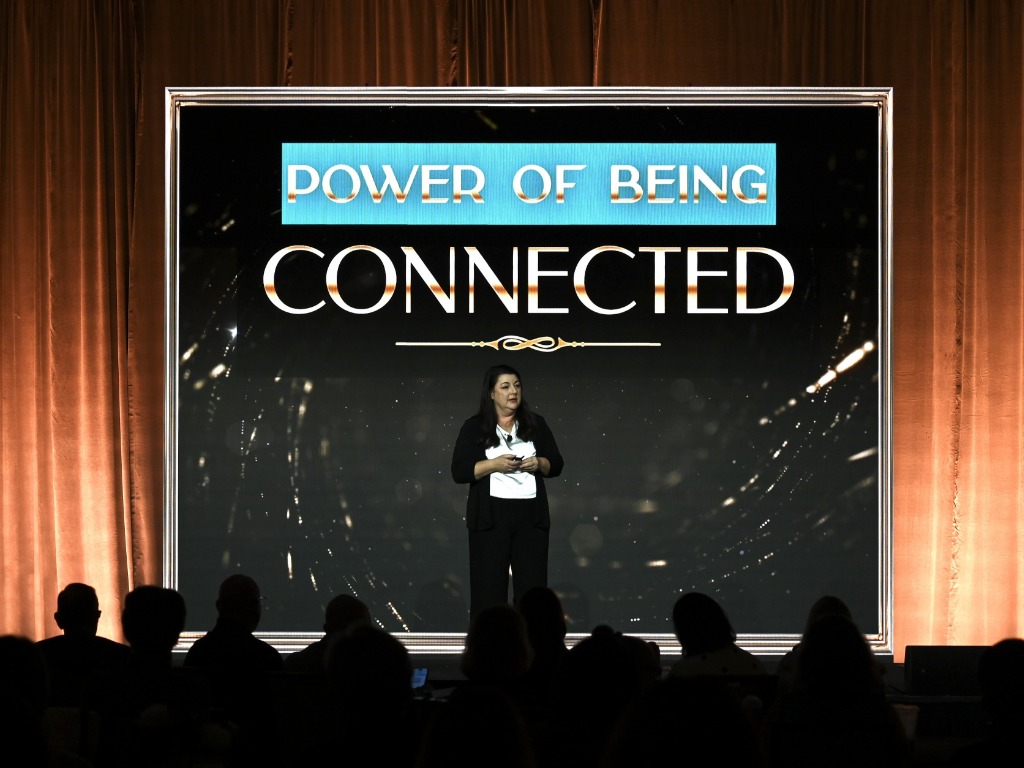
But younger generations aren’t necessarily spending that wealth in the same way as their parents and grandparents. Mazza said younger affluent travellers are placing greater value on experiences and are not as conservative with their money. As she spoke about younger generations’ looser purse strings, murmurs of agreement could be heard from advisors around the room.
The subject resurfaced during a media panel looking at luxury travel in the 2030s. Panellists said many millennials and Gen Z travellers grew up travelling internationally with their parents and are now looking for increasingly sophisticated experiences of their own.
Melissa Lizell, Executive Vice President of Lizell Travel, said younger clients may have the technology to book trips themselves, but that doesn’t mean they want to. Many would rather turn to someone who already has the knowledge, and she has found them willing to pay professional fees for that expertise.
“They’re not afraid to spend money,” she said, adding that while younger travellers can be deliberate about how they spend it, travel remains a priority.
As Gen Z becomes parents, Lizell expects them to introduce their own children to international travel earlier because it was already part of their upbringing.
From visible to “silent” luxury
Canadian advisor Kim Cross, Vice President, Leisure Strategies, Away by TTI Travel, described another shift toward what she calls “silent luxury.”
“What they want now is what people can’t see, and yet is about how it makes them feel,” she said.
Traditional markers of luxury still matter, but affluent travellers increasingly want something more individual. Cross recalled one particularly exacting client who wanted a plunge pool maintained at precisely 87 degrees.
Personalization now accounts for 27% of the U.S. luxury travel market and is growing 17% annually, according to figures presented at the symposium.
Canadians are pivoting, not cancelling
For Canadian advisors, one of the most interesting discussions centred on changing travel patterns to the United States.
Cross said she has seen a “large pivot” among her Canadian clientele, with some choosing not to travel to the U.S., including clients who own homes there.
But they aren’t giving up their vacations.
“It was a pivot, not a cancellation,” she said.
Costa Rica has been a major beneficiary, according to Cross, along with Portugal, Spain and Colombia. Asked whether the shift had resulted in a drop in overall bookings, her answer was unequivocal: “Not at all.” In fact, her bookings have increased by 53%.
AmaWaterways co-owner and Vice President of National Accounts Gary Murphy told Baxter the company is also seeing Canadian business increase dramatically, up 163% since last year, although he couldn’t attribute the growth to any single factor. He confirmed that the increase hasn’t been driven by additional Canadian marketing spending but credited his excellent Canadian and also theorized that it was perhaps because, “Canadians aren’t going to the United States, they’re going to Europe.
Murphy has also noticed Canadians gravitating toward longer itineraries.
“Canadians actually like the longer cruises,” he said, pointing to Amsterdam-to-Budapest and 11-day Moselle and Rhine sailings. “Or they’ll do two back-to-back.”
The advisor as the luxury
Perhaps the strongest message for advisors was that as information becomes easier to access, trusted expertise may become more valuable.
One panellist put it this way: “What you’re really selling to your affluent travellers is yourself, your knowledge and your relationships.”
Master of ceremonies Michaela Guzy returned to that idea in her closing remarks, reminding advisors they were recommending real experiences long before the word “influencer” entered the travel vocabulary.
Her challenge for their next client proposal was simple: “Name a human being your client will meet on their trip.”
“A destination doesn’t sell itself,” she added. “A person does.”
Connection was, fittingly, the theme of this year’s symposium and plenty of valuable connections were made.
For Calgarian advisor Dawne Tkachuk with Travel Potions, the pace of the event gave her the chance to make those connections count.
“This conference has definitely been a wealth of information,” she said. “I’ve really enjoyed the pace. It hasn’t felt rushed, which has given me the chance to slow down, have meaningful conversations and dive deeper with suppliers.”
For Tkachuk, those conversations ultimately come back to the traveller.
“Learning more about luxury products and discovering new ways I can bring those experiences to my clients has been incredibly valuable.”
In The Photos
TOP
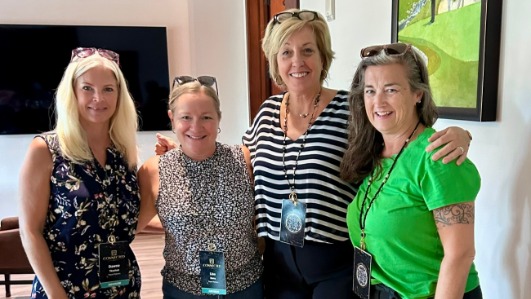
Seen here, from l to r, are Dawne Tkachuk, Lisa Berry, Denise Tudor (Canadian advisors with Travel Potions) & Jane Clementino, senior vice-president and general manager of TRAVELSAVERS Canada (Photo by Jennifer Merrick)
SECOND
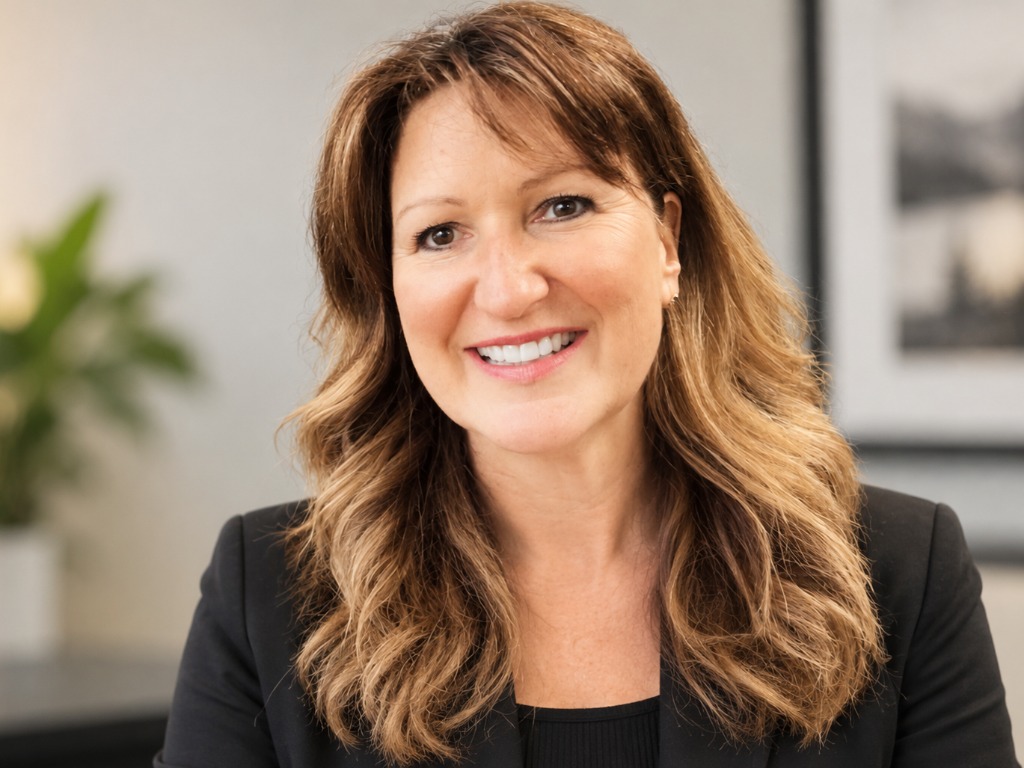
Nicole Mazza, Chief Marketing Officer
THIRD
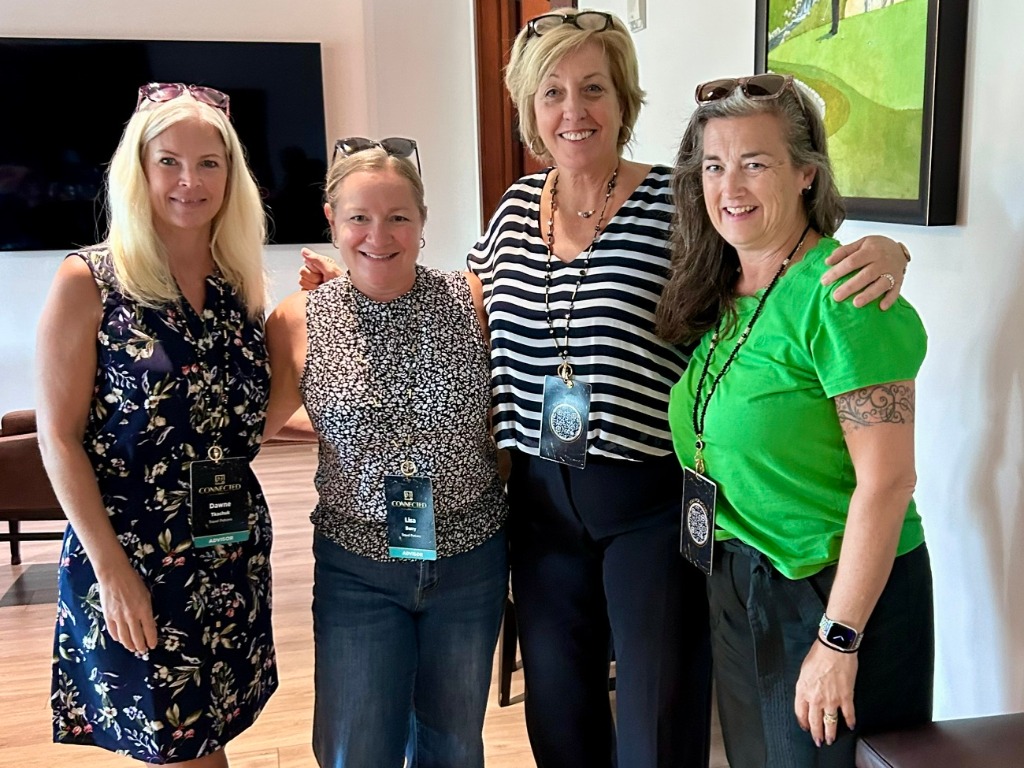
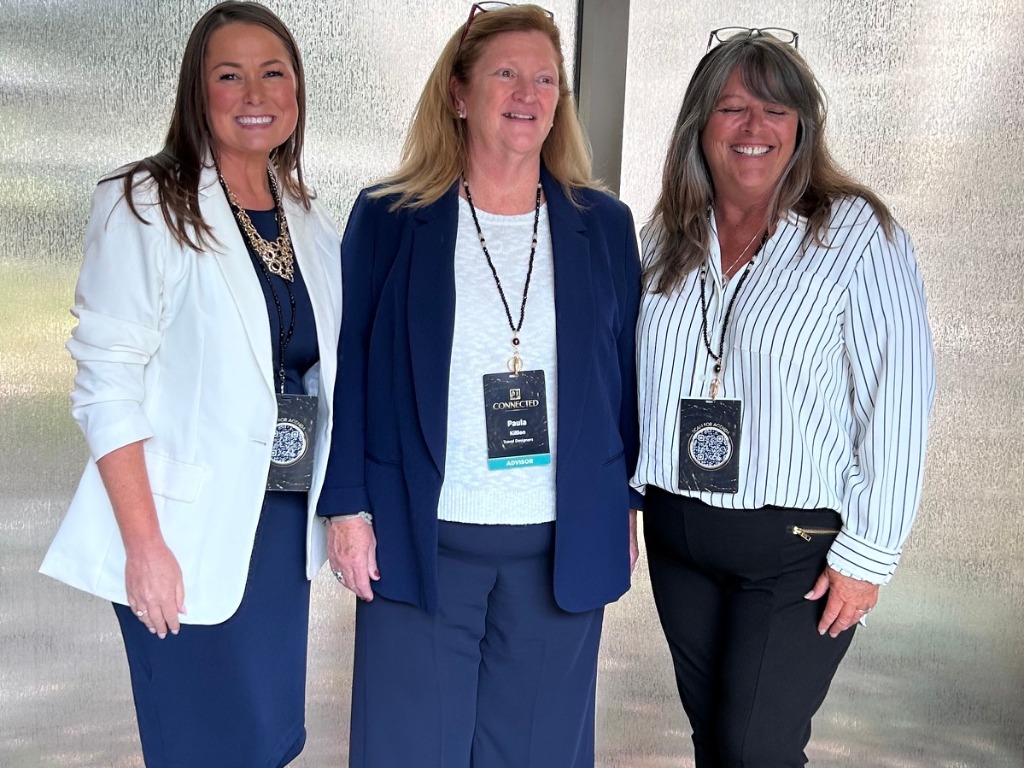
Seen here, from l to r, are advisors on Media Panel — Kim Cross, Paula Killion, Melissa Lisell
FOURTH
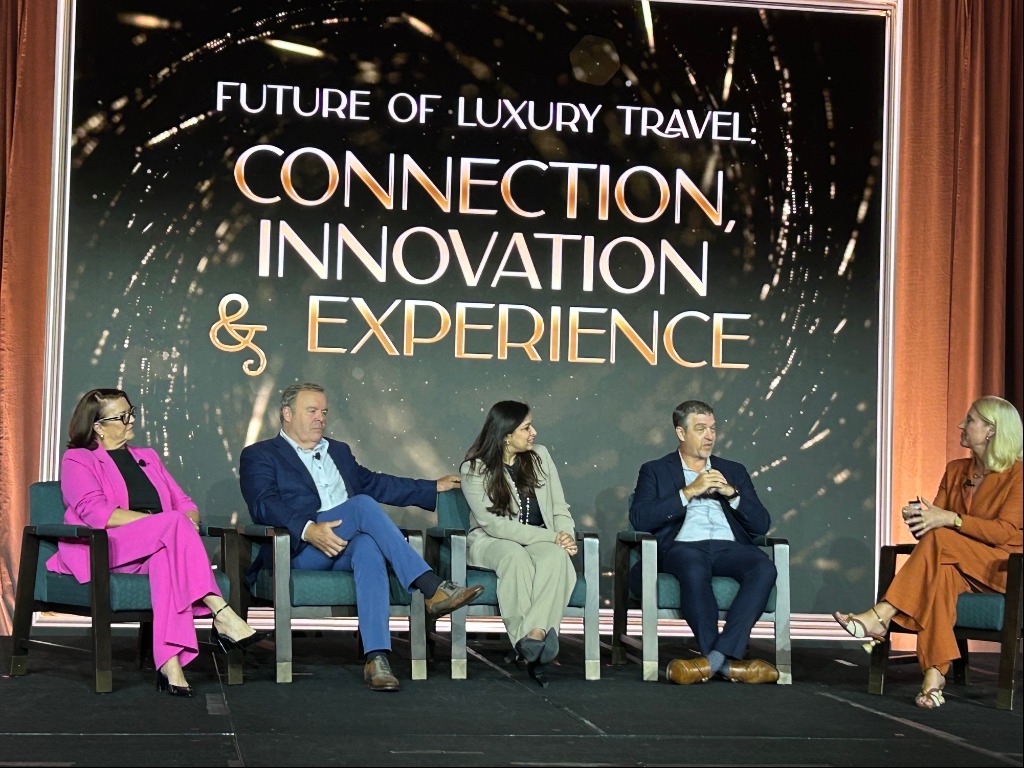
Future of Luxury Travel Panel (Photo by Jennifer Merrick)